Conversion is the life’s work of every man and woman born on this earth. Baptized or not, believer or not, we face daily the choice of turning away from or toward the God who made us, who saved us, and who offers us life everlasting.

In the past two centuries, five figures feature prominently for their conversions to the Roman Catholic faith and the inspiration these conversions offered to English-speaking and English-reading people, believers and non-believers alike. Their names are John Henry Newman, Robert Hugh Benson, Ronald Knox, G. K. Chesterton, and Caryll Houselander.

Saint John Henry Newman

Born in 1801, John Henry Newman became an Anglican priest and had a notable career at Oxford University. Then, in 1845, in an event that rocked the English world, he became a Roman Catholic. After his conversion, he wrote dozens of books and poems, thousands of letters, and countless sermons, and was an active shepherd of souls, founding Oratory houses and serving as rector of the Catholic University of Ireland. In Newman, declared Pope Benedict XVI, “that tradition of gentle scholarship, deep human wisdom and profound love for the Lord has borne rich fruit, as a sign of the abiding presence of the Holy Spirit deep within the heart of God’s people, bringing forth abundant gifts of holiness. Declared a saint in 2019, Newman was then named a Doctor of the Church—the 38th saint to receive that title in the history of the Church.

From the time that I became a Catholic…I have been in perfect peace and contentment. I never have had one doubt. I was not conscious to myself, on my conversion, of any difference of thought or of temper from what I had before. I was not conscious of firmer faith in the fundamental truths of revelation, or of more self-command; I had not more fervour; but it was like coming into port after a rough sea.Saint John Henry Newman

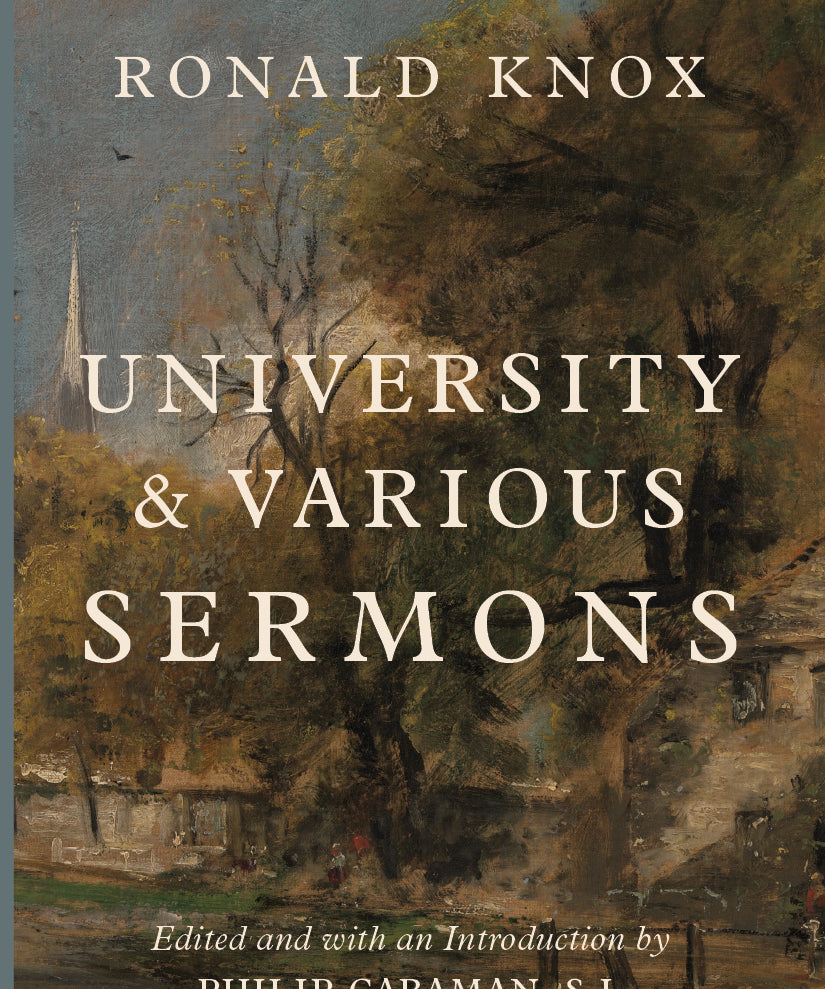
Ronald Knox

Born in 1888 into a prominent Anglican family (his father would eventually become the Anglican Bishop of Manchester), Ronald Knox became one of the most notable converts from Anglicanism to the Roman Catholic Church since Newman, being received into the Church by the abbot of the Benedictine Farnborough Abbey in 1917. From then on, Knox contributed widely and well to the glory of his newfound spiritual home: offering hundreds of retreats, writing dozens of books, completing his own acclaimed translation of the Bible, and embracing to the full the priestly life which he loved until his death in 1957.

I have found harbourage, the resting-place which God has allowed to His people on earth…despising the winds, not because no breath of air ever comes there, but because God himself has entrusted the command of those winds to his own Delegate…Ronald Knox

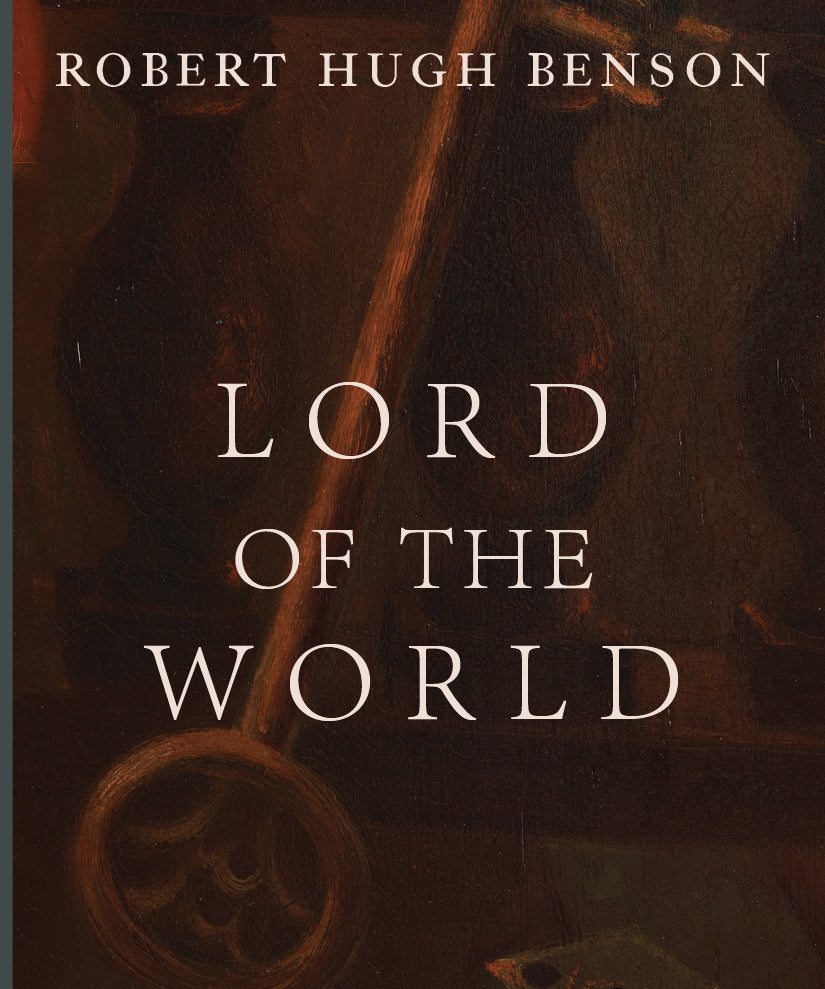
Robert Hugh Benson

Born the youngest son of the Archbishop of Canterbury in 1871, Robert Hugh Benson was himself ordained a priest of the Anglican Church and then, at the age of thirty, he began seriously to examine the claims of the Roman Catholic Church. In 1903, he converted and, in 1904, he was ordained a Catholic priest. His zeal for the Faith was was borne out by dozens of books: novels, short stories, plays, spiritual works, sermons, and essays.

I see God’s plan with me lying like a golden thread through all the tumbled country through which I have come… And through all this ruined wilderness He has brought me, of His infinite goodness, to that place where Jerusalem has descended from on high, which is the mother of us all; He has brought me out of the mire and clay and set my feet upon the rock; He has lifted me from those straying paths that lead nowhere, on to the broad road that leads to Him.Robert Hugh Benson

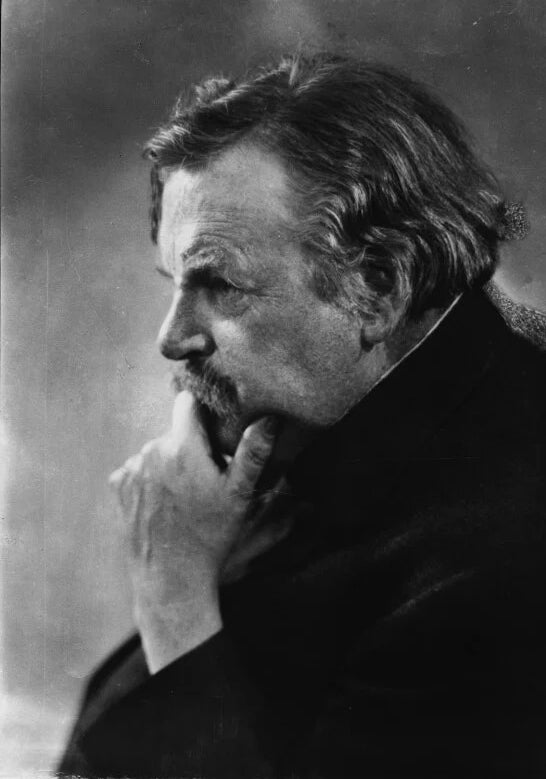
G. K. Chesterton

Born in 1874, Gilbert Keith Chesterton arrived at his true spiritual home  in 1922—a relatively late homecoming, considering that he published his epochal work of apologetics, Orthodoxy, in 1908. For all that, Chesterton wasted not a moment of the time allotted to him by Providence. A master of the English language, its craft and its tricks, he wrote over eighty books, hundreds of poems and short stories, and thousands of essays, all of them opening in their own way a window onto the glorious expanse of Truth: with rich humor and genuine affection, with an imagination as fantastic as fairy-land and a vision of God and his creation as clear as crystal.

The difficulty of explaining “why I am a Catholic” is that there are ten thousand reasons all amounting to one reason: that Catholicism is true.G. K. Chesterton

Caryll Houselander

Born in 1901, Caryll Houselander was received into the Catholic Church when she was six years old. “Strictly speaking,” in her own words, she “was not a ‘cradle’ Catholic but a ‘rocking-horse’ Catholic.” But the operative word was certainly Catholic—for Caryll Houselander loved Jesus Christ and His Church, deeply and happily. And her work over the course of a challenging and illness-plagued life testified to that: until her untimely death at the age of fifty-four, Houslander cared for the poor and desolate, materially as well as intellectually and spiritually, and most especially with her writing. So profound were her insights that Monsignor Ronald Knox once declared that Caryll Houselander ought to open a school of spirituality, describing how “In all she wrote, there was a candour as of childhood: she seemed to see everything for the first time, and the driest or doctrinal considerations shone out like a restored picture when she had finished with it.”

It was Christ Who rose up and went up to the altar—Christ Who had seen evil naked, face to face, Christ Who had been brought down to the ground, under the world’s sin, to sweat His blood into the dust, and Christ Who has overcome the world.Caryll Houselander